
Shows
BAIBAHIK | বৈবাহিক

- Direction: Sudipta Sarkar
- Production:
- Actors:
Baibahik is a sharp-witted and light-hearted social comedy that explores the complexities of modern matrimonial relationships in today’s changing world. In an age where traditional marriages coexist with live-in relationships, the boundaries of conjugal life are constantly being redefined. The play humorously reflects on how evolving social norms, personal ambitions, and lingering orthodox mindsets often clash, shaping how individuals perceive love, companionship, and commitment.
At the heart of the story lies a young, imaginative author caught in the chaos of choice. Admired by his legion of female fans, he finds himself unable to decide who among them could truly be his ideal life partner. What begins as an innocent admiration soon turns into a comical whirlwind of obsession, manipulation, and self-interest. Each admirer—charming on the surface—reveals her own subtle motives and desires, turning the author’s romantic dilemma into a theatrical battleground of wit and vanity.
Through a clever interplay of humor and satire,
Baibahik delves beneath the surface of modern relationships to expose the contradictions of contemporary love. It portrays how, beneath the masks of sophistication and romance, lie very human tendencies toward greed, insecurity, and the yearning for validation. The author’s encounters with his overzealous fans serve as both hilarious misadventures and poignant commentaries on how affection, fame, and ambition intersect in today’s world.
Blending situational comedy with moments of biting social insight, Baibahik ultimately holds up a mirror to society—inviting the audience to laugh, reflect, and perhaps recognize a piece of their own reality within its spirited narrative.
KANTHA RODH | কণ্ঠরোধ

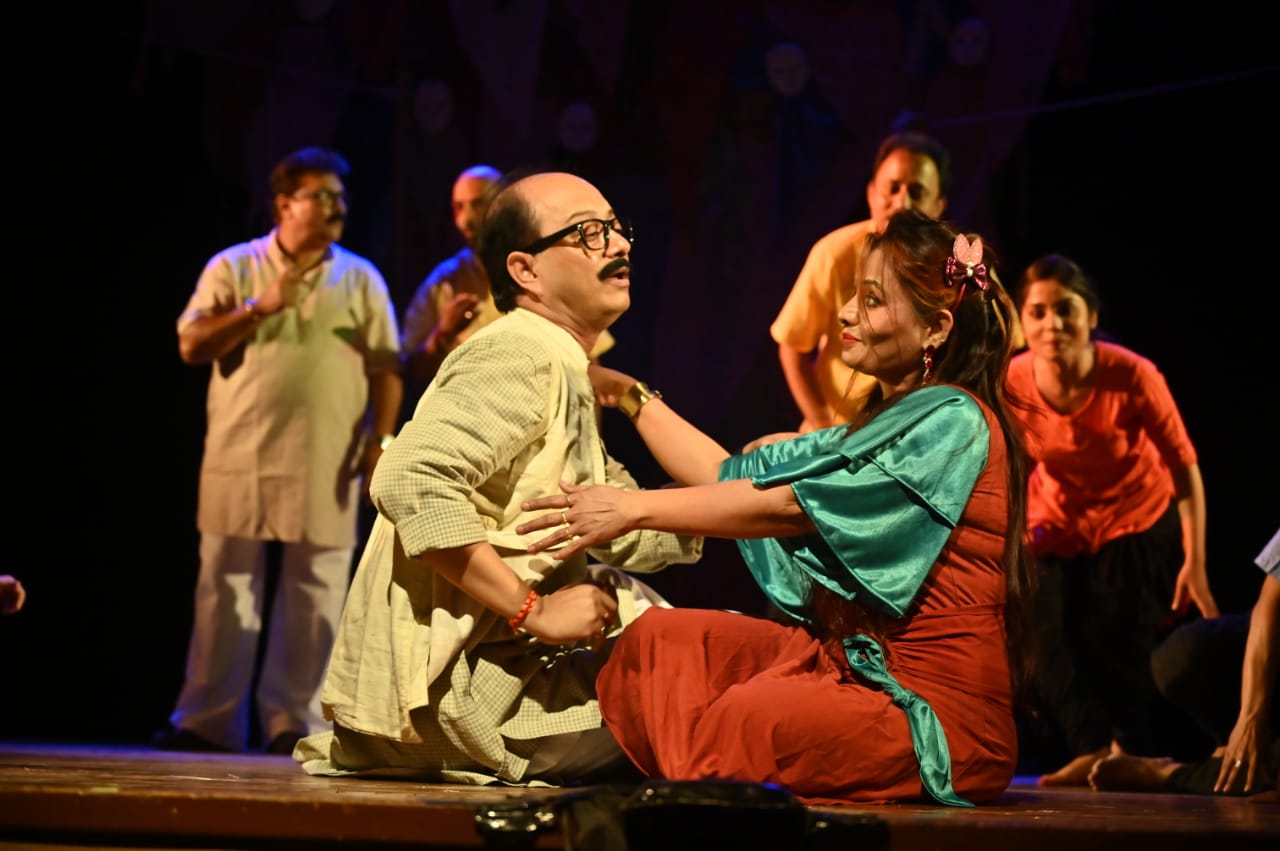
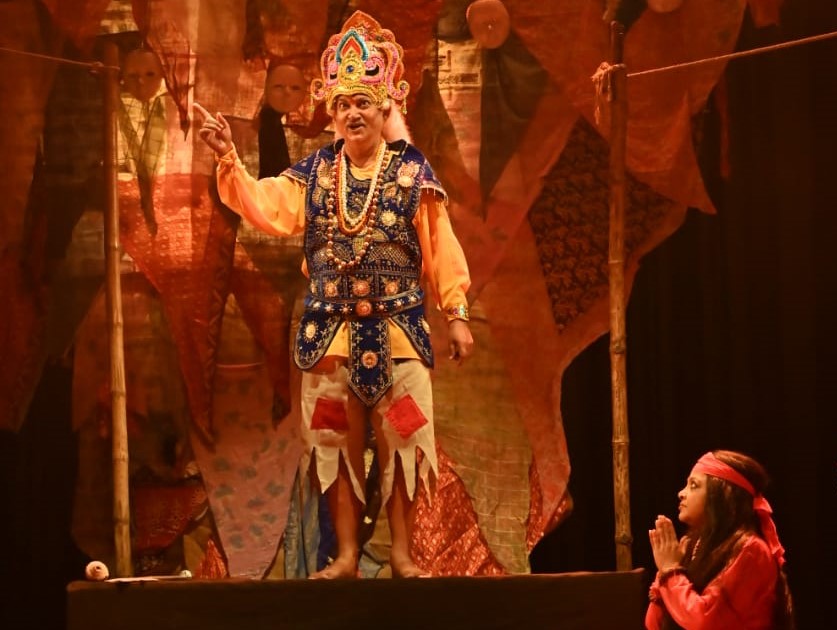
The play is basically an absurd political satire. It is inspired by a short story of the eminent author, Ramanath Roy. The play begins with the speech of a minister who makes a number of promises for the well being of the common people. He goes giving false assurances and unhesitatingly makes fake promises to please the audience. Suddenly he loses his voice and can not utter a single word, no matter how hard he tries. Many doctors attend him but he fails to recover. After few incidents, his party members arrange for a Godmother, who has the special power to converse with the holy deities. Finally she manages to communicate with Yudhisthira – the unfallen Pandava of Mahabharata, regarding the loss of his voice. God concludes that due to endless false commitments made by the minister , he has lost his voice. It can be regained only with one condition – he can never lie in future. The minister happily accepts the condition and gets his voice back. But as a political leader he is unable to stand up to the condition and change his nature. Eventually he loses his voice for ever.
SUBHADRARA | সুভদ্রারা


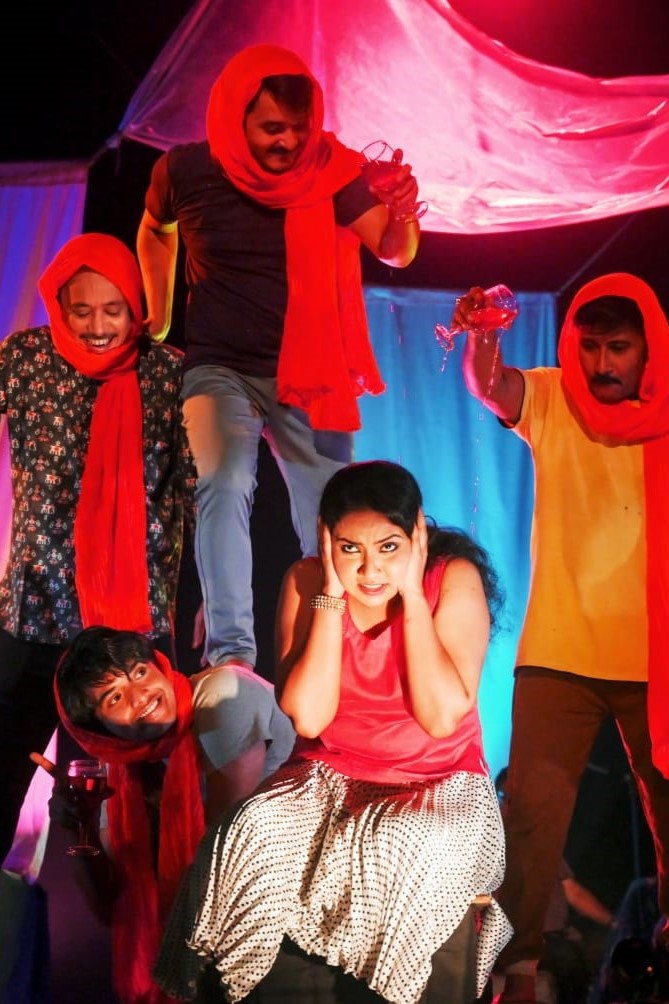
‘Subhadrara’ is the story of a girl of today’s generation who unknowingly gets entrapped in the webs of contemporary problems. She desires social media validation and seeks popularity on apps like Facebook and Instagram by creating reels to increase her online engagement with viewers and followers. She was under the impression that being an influencer would lead her into a life of never-ending wealth and stardom. In a desperate attempt to meet these unrealistic dreams, she resorted to every possible means just to make reels and put herself out there in a public forum even if it was not a tasteful representation. She starts getting detached from her parents and her partner. She gets heavily swayed by Jhumur, a woman consirably older to her. Even though Jhumur hailed from a simple family, she managed to build her own empire and designed an affluent life for herself. Subhadra wishes to follow in her footsteps. Gradually she comes to the realization that Jhumur had not secured all her earnings using entirely honest means, she associated with the dark underworld along with other respectable members of the community. This play traces Subhadra’s journey of self discovery and celebrates the restitution to her regular life.
DHUSHOR PRITHIBI | ধূসর পৃথিবী

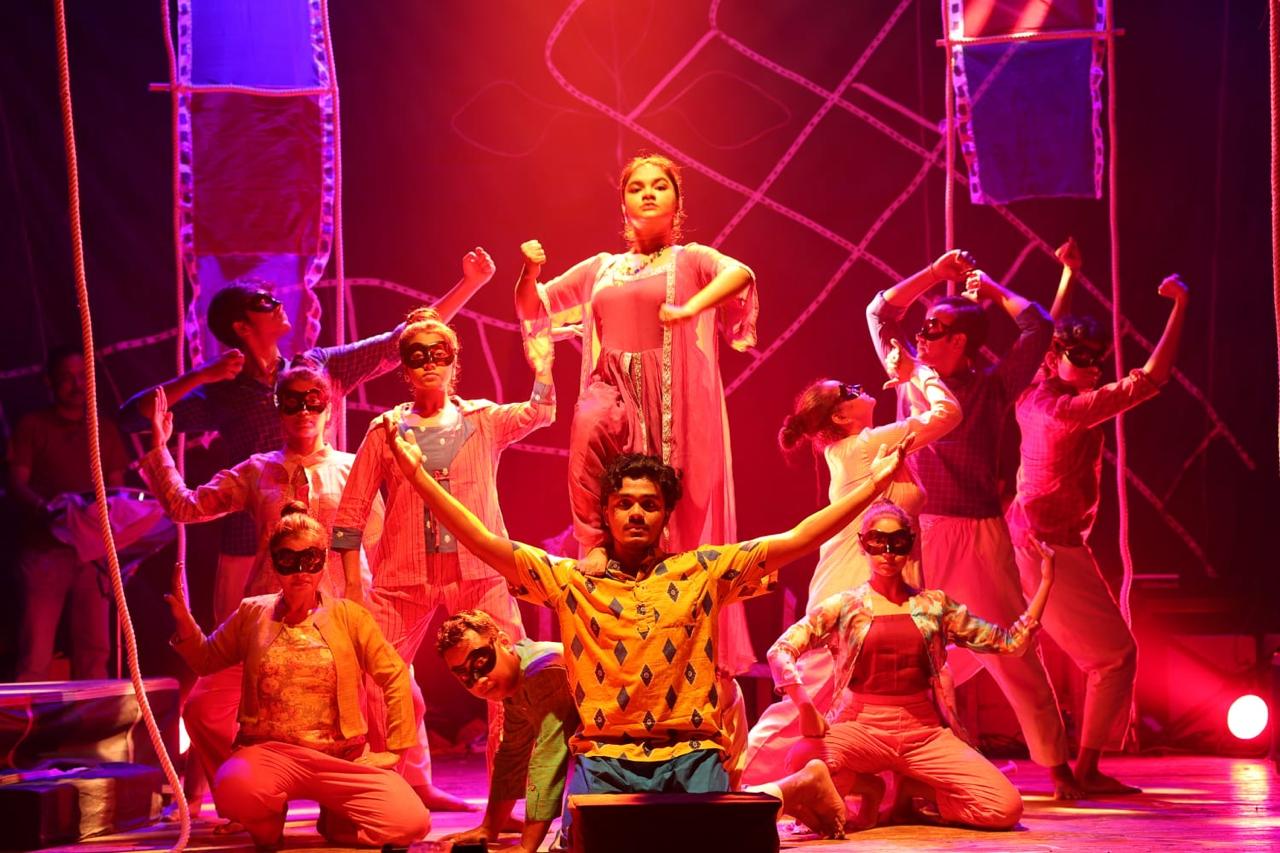
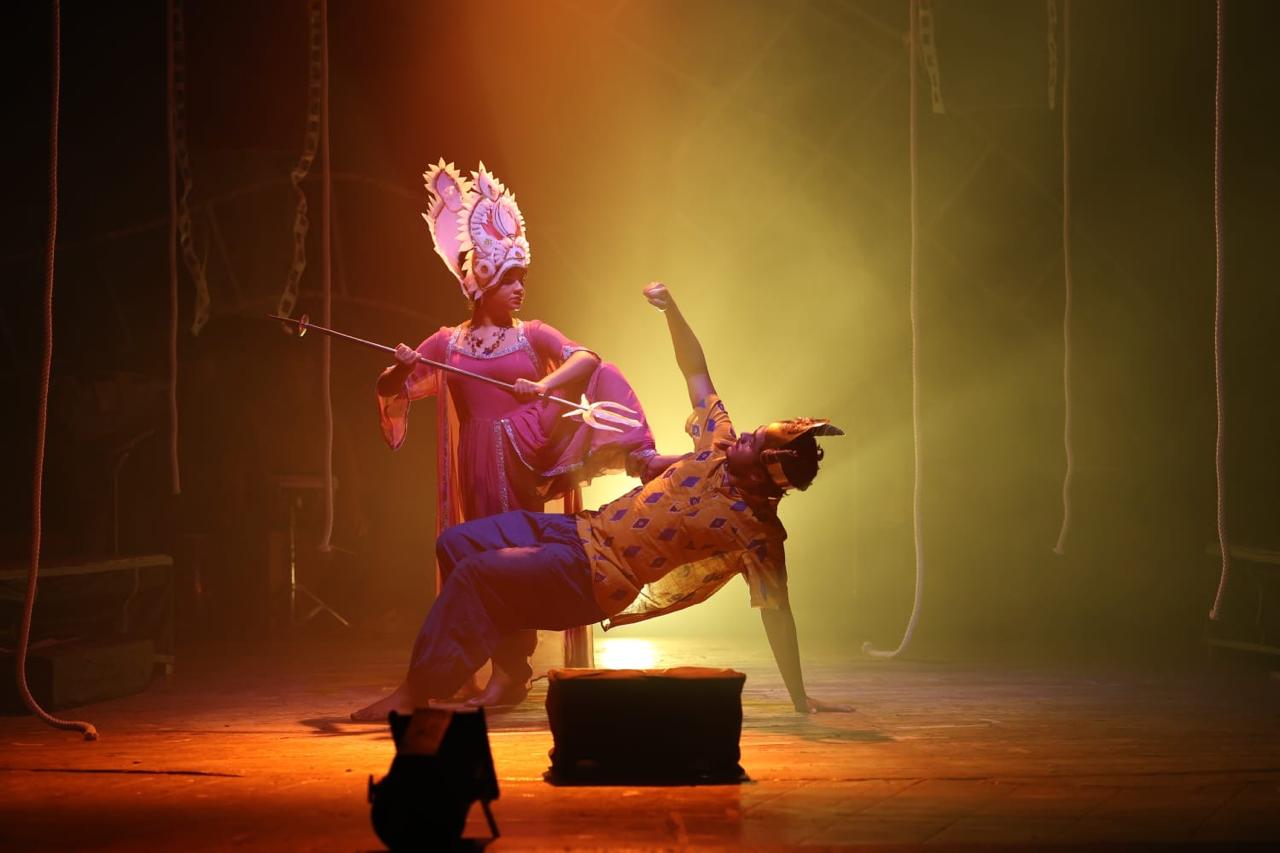
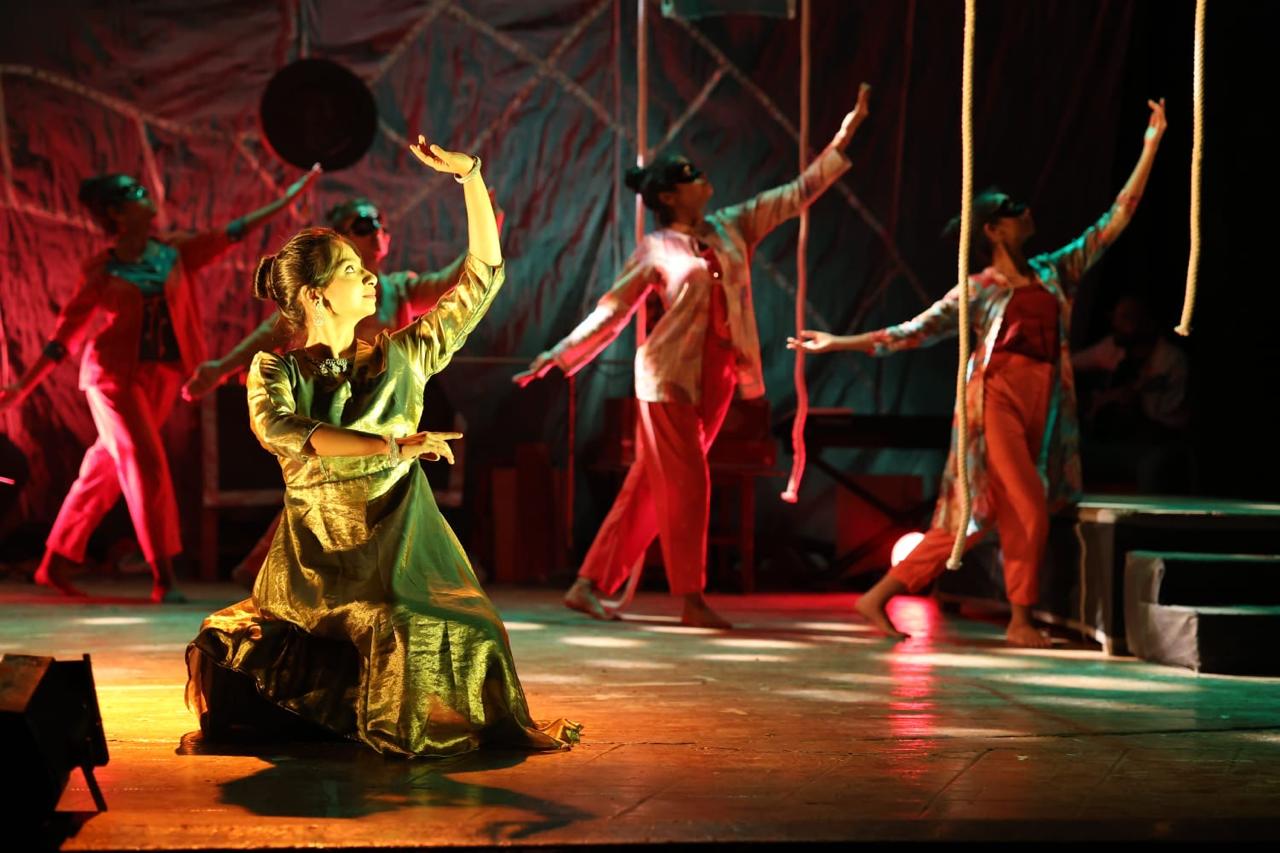
exists another world, quietly intertwined with our own. Behind the vibrant colours of everyday life lies a grey realm—silent as ash, hidden from sight, yet always reaching out to us. Though invisible to the eye, it trails our footsteps like a shadow—formless, scentless, but infinitely alluring. Its presence is subtle, but its pull is unrelenting.
In the world of the silver screen, some rise to stardom, while others vanish into obscurity. This play captures the journey of today’s generation, mesmerized by that mysterious, irresistible call, that lures them toward the light, yet often leads them into shadows.
‘Dhushor Prithibi’ (The Grey World) captures the soul of the stories hidden behind the glamour and star-studded life of the cinematic world. It is a world where light and darkness move in tandem, and behind every triumph echoes a nameless cry. This play is a journey of discovery—where dreams collide with reality, and each challenges the other in an endless search for truth.
‘Dhushor Prithibi’ is not just a story—it is an invocation, a question, and an awakening.
PLATONIC | প্লেটোনিক
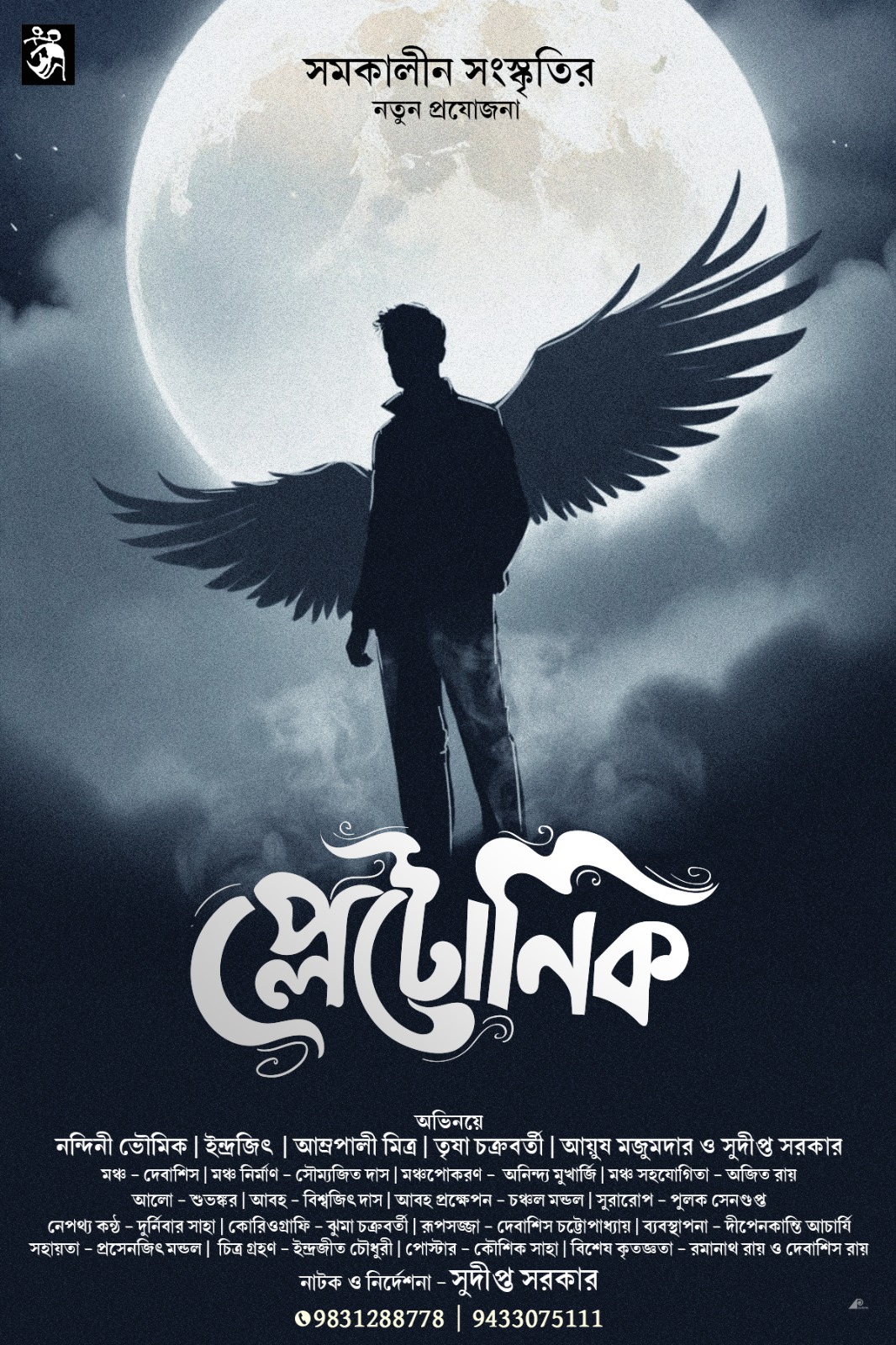

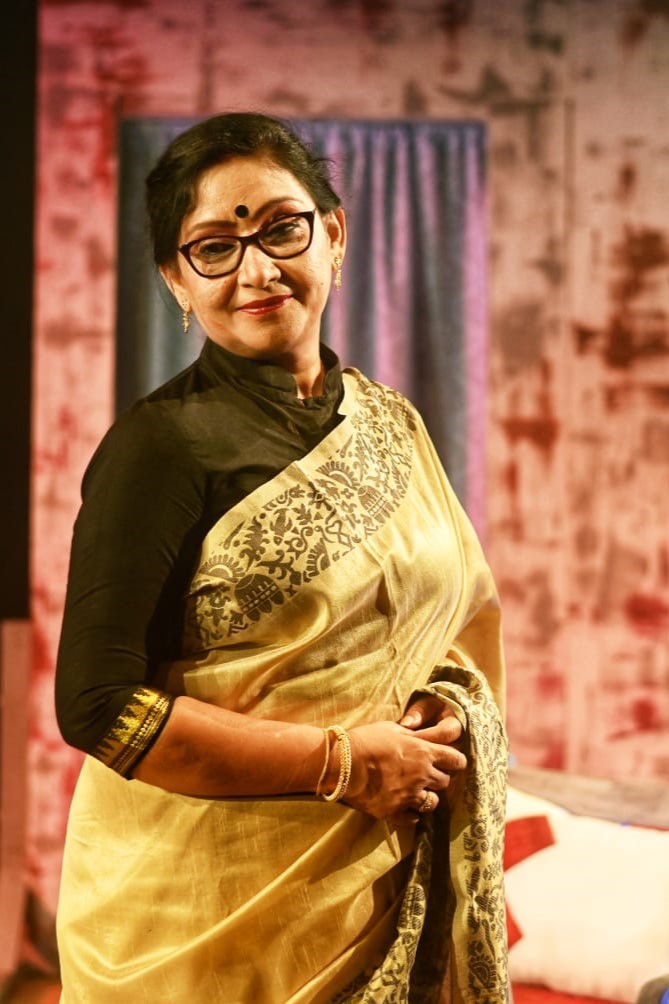
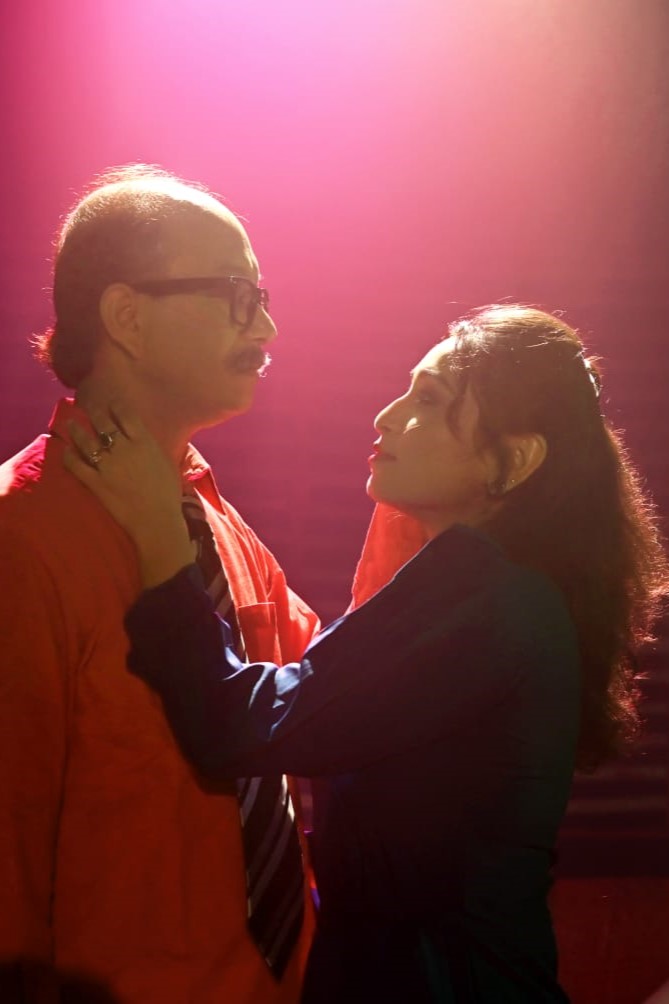
Jyotibhushan and Bipasha are a couple. They lost their only daughter, Lopa in an accident when she was sixteen years old. Bipasha manged to cope with the loss somehow but her husband could not come to terms with such a tragedy. There were inconsistencies in the way he behaved. He keeps wanting to travel back in time when circumstances were less painful. A girl selling incense sticks walks up to his house one day. Her joss sticks were called ‘Platonic’. She claimed to teleport a person to the past through the fragrant spell of her product. This hope entices Jyoti to retract to his past and his deluded mind encourages him to keep trying. He even asks his wife to consider having a second child. Bipasha is aware of the debilitating state of his mind. Finally, Jyoti abandons everything and sets forth in a quest for the ‘Platonic’.
BISHBRIKKA | বিষবৃক্ষ

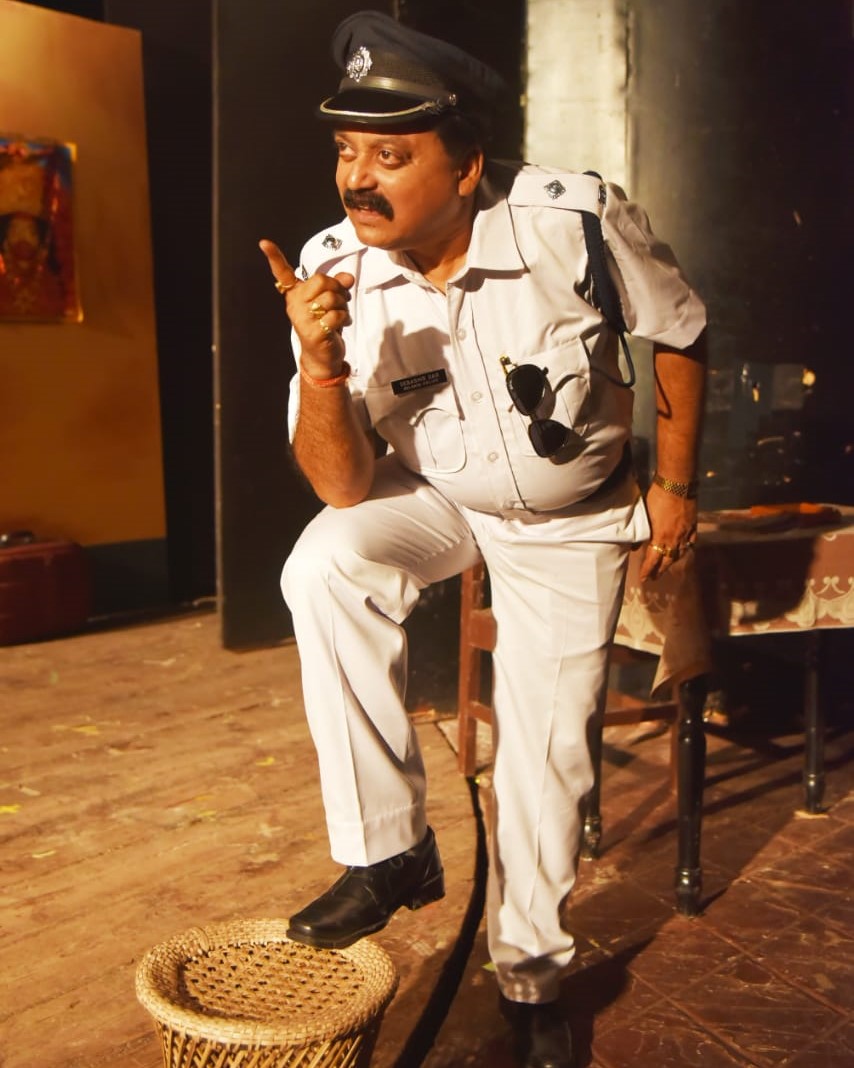
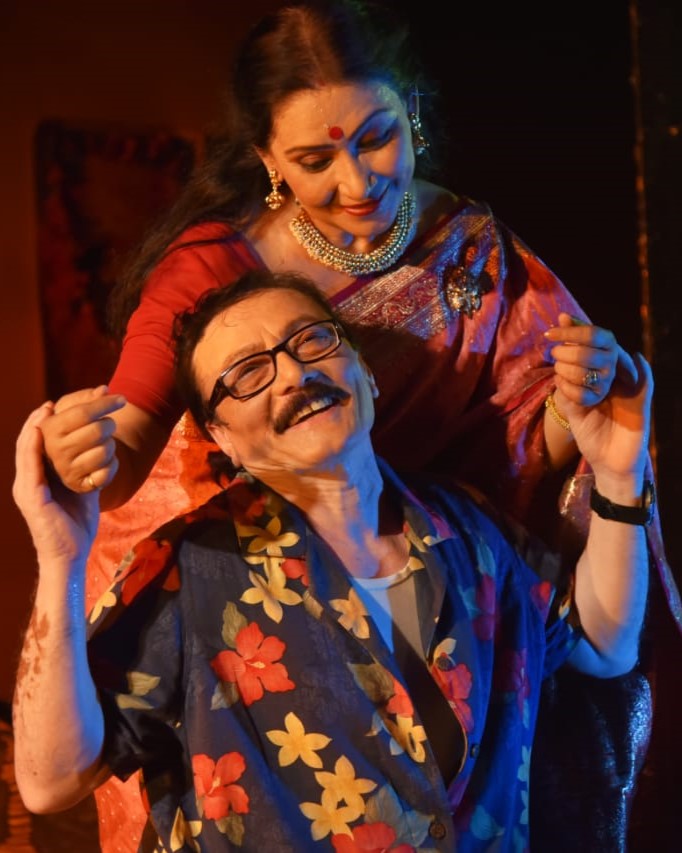
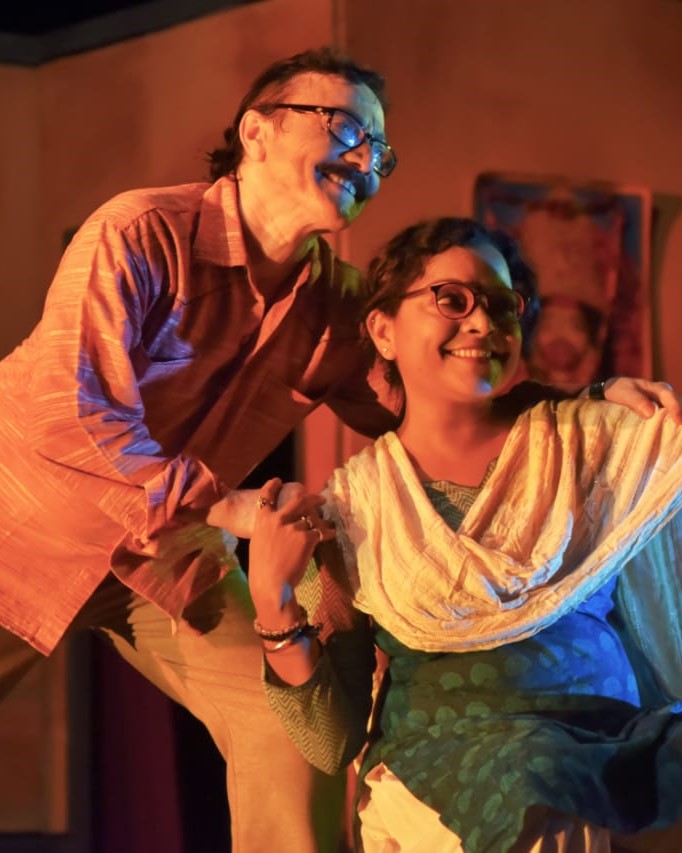
Kamal ,a middle- aged ordinary man, whom we meet frequently within our known periphery, dominates the play. He leads a simple life in a rented house. One day, his old friend, Dola, arrives and asks for one of his kidneys, which would be required urgently for the recovery of her dying husband. Now, Kamal realises the true reason for this unexpected visit and does not know what to do. Meanwhile, a locally influential woman, Mistu, asks for a kidney from him. Kamal disagrees and then both manipulate him by using political influence and threaten to denigrate his reputation if he did otherwise. Giving away both of his kidneys is impossible as then he would clearly die. His land- lady, Kusum, and lawyer, Gagan, extent their helping hands at this juncture and ask him to seek protection from the police. The police saves him from them but astounds Kamal, when he requests for a kidney from him for his ailing wife. This simple man who is eventually ripped apart by the complex twists and turns of life, finds a life-wand in the end and prepares to tread a totally different world with Kusum.
‘Brikka’ or kidney acts as a metaphor in this play. The familiar masked faces turn foreign with time to serve their selfish interests. The all- pervading power forces man to seek help from the law and media. Life becomes a strange ebb and flow of uncontrolled situations. The little incongruencies and helplessness evoke laughter but finally the deep, thoughtful message of the play touch the hearts of the audience.
KALAPAHAD | কালাপাহাড়
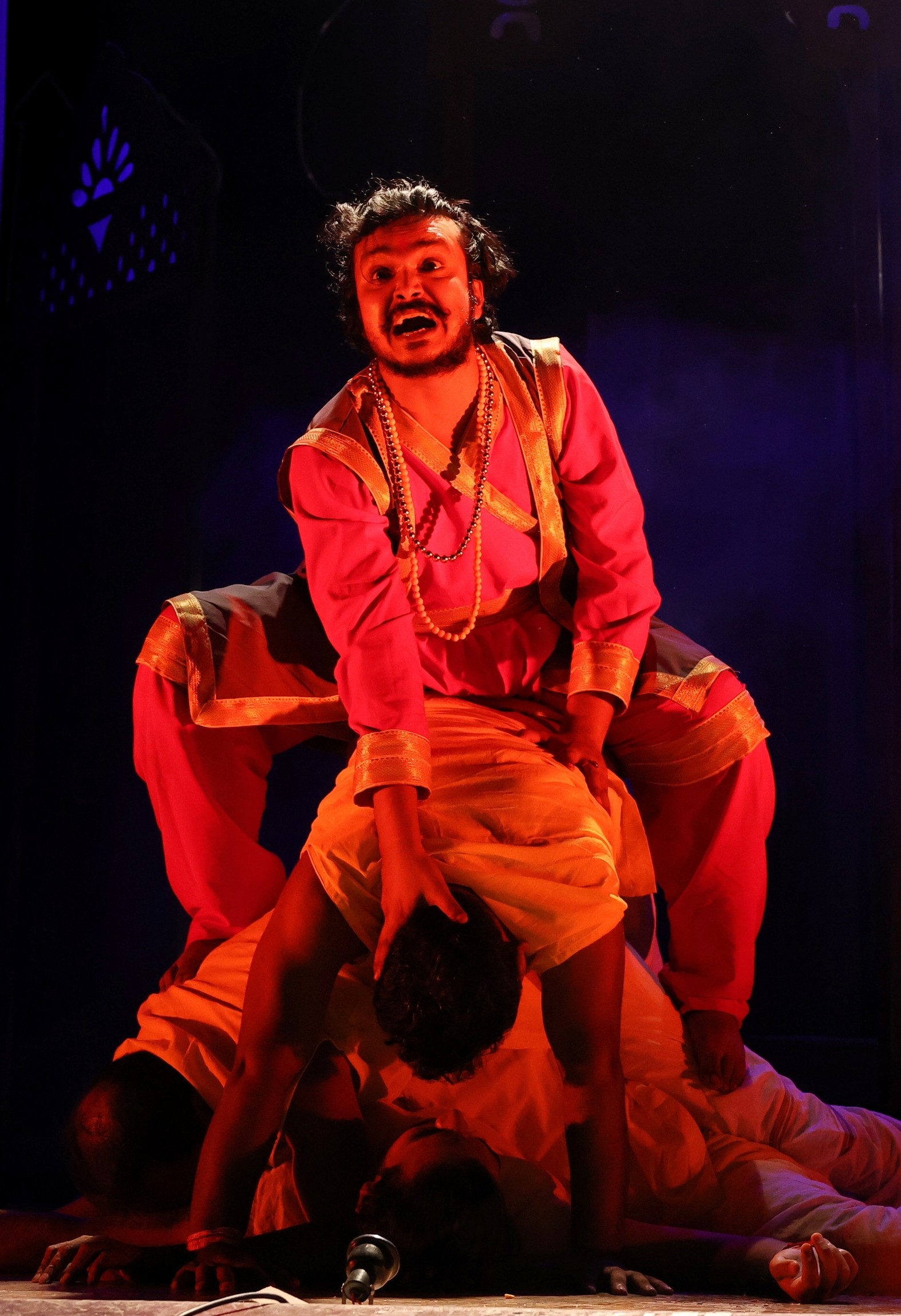
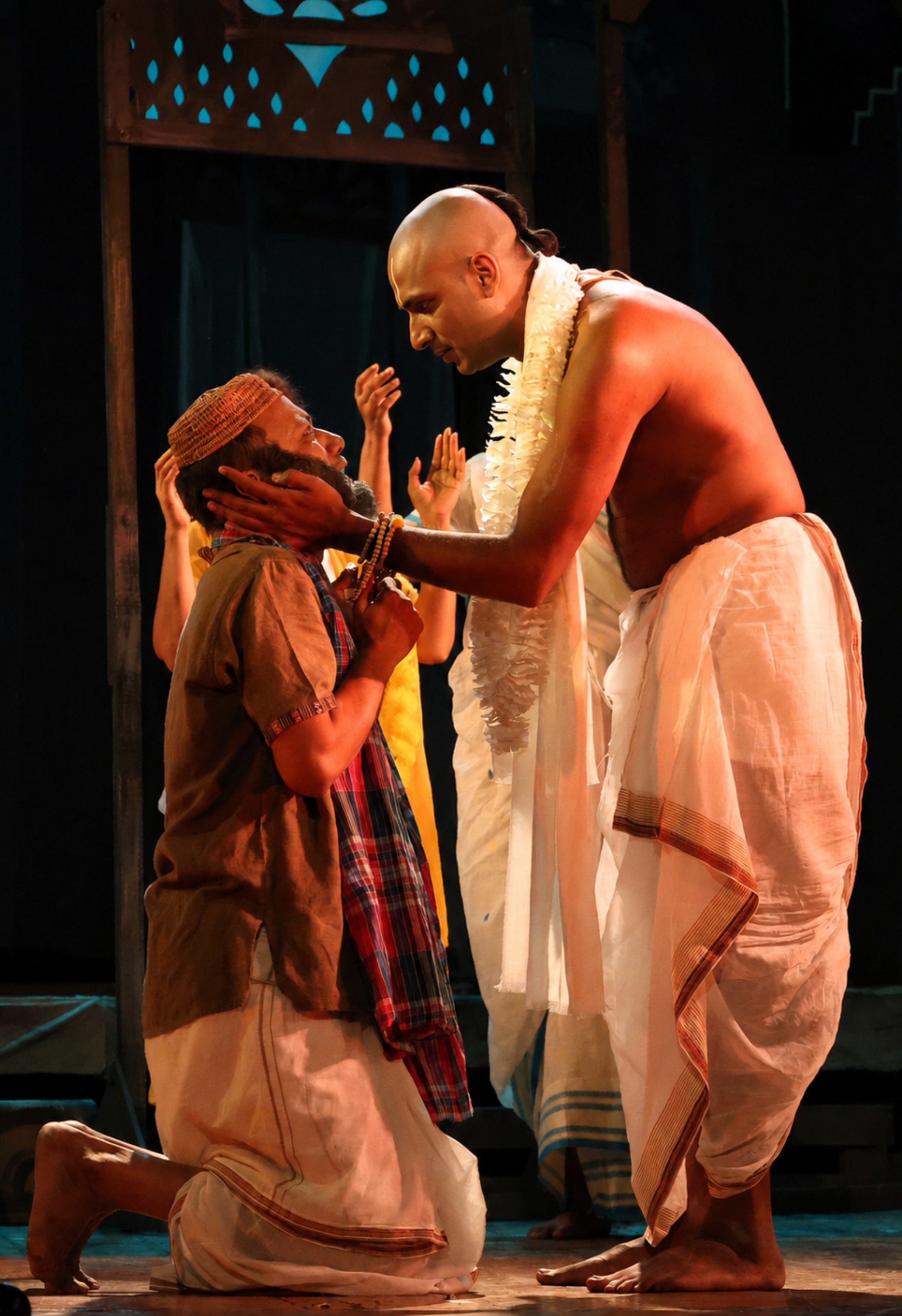
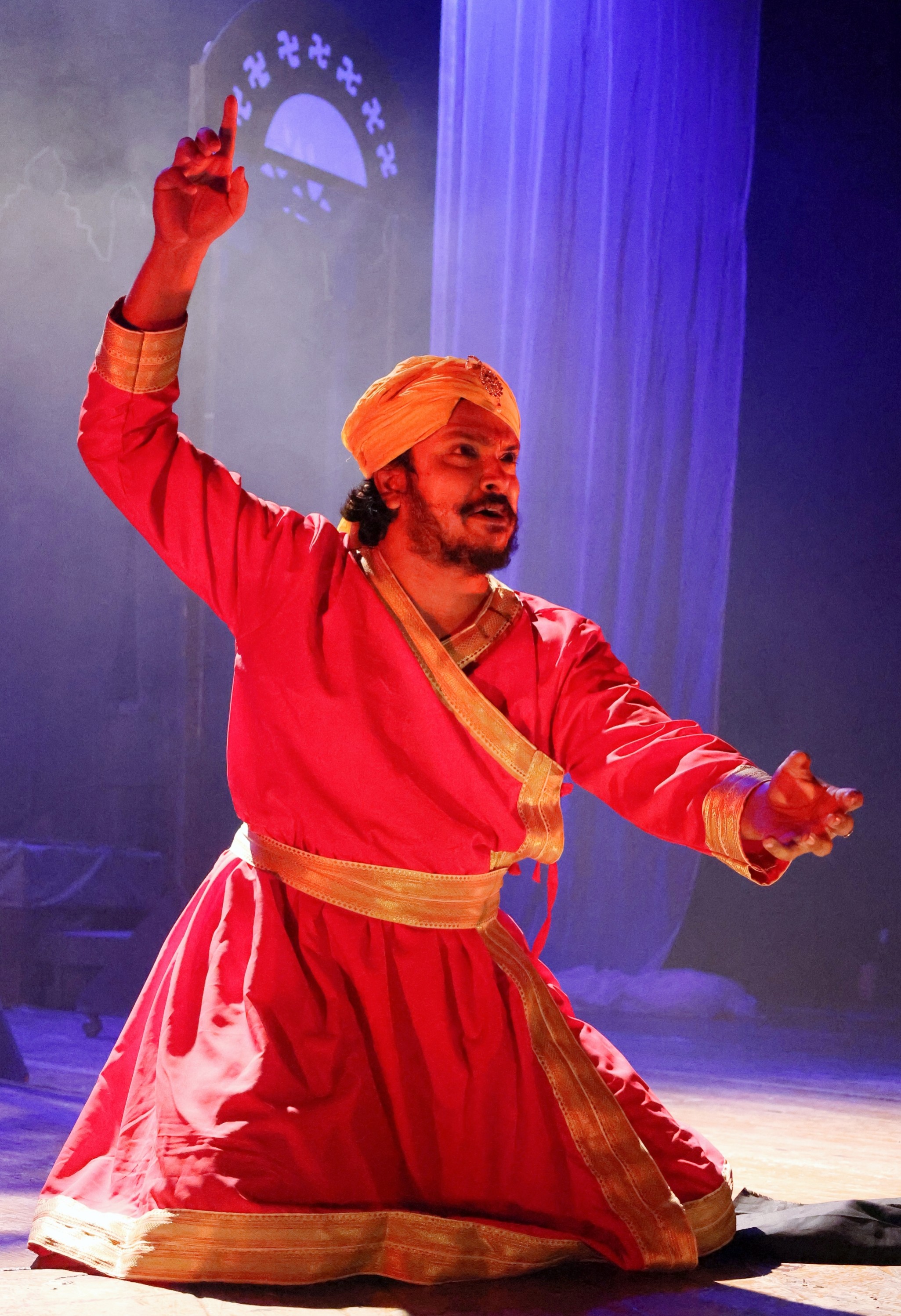
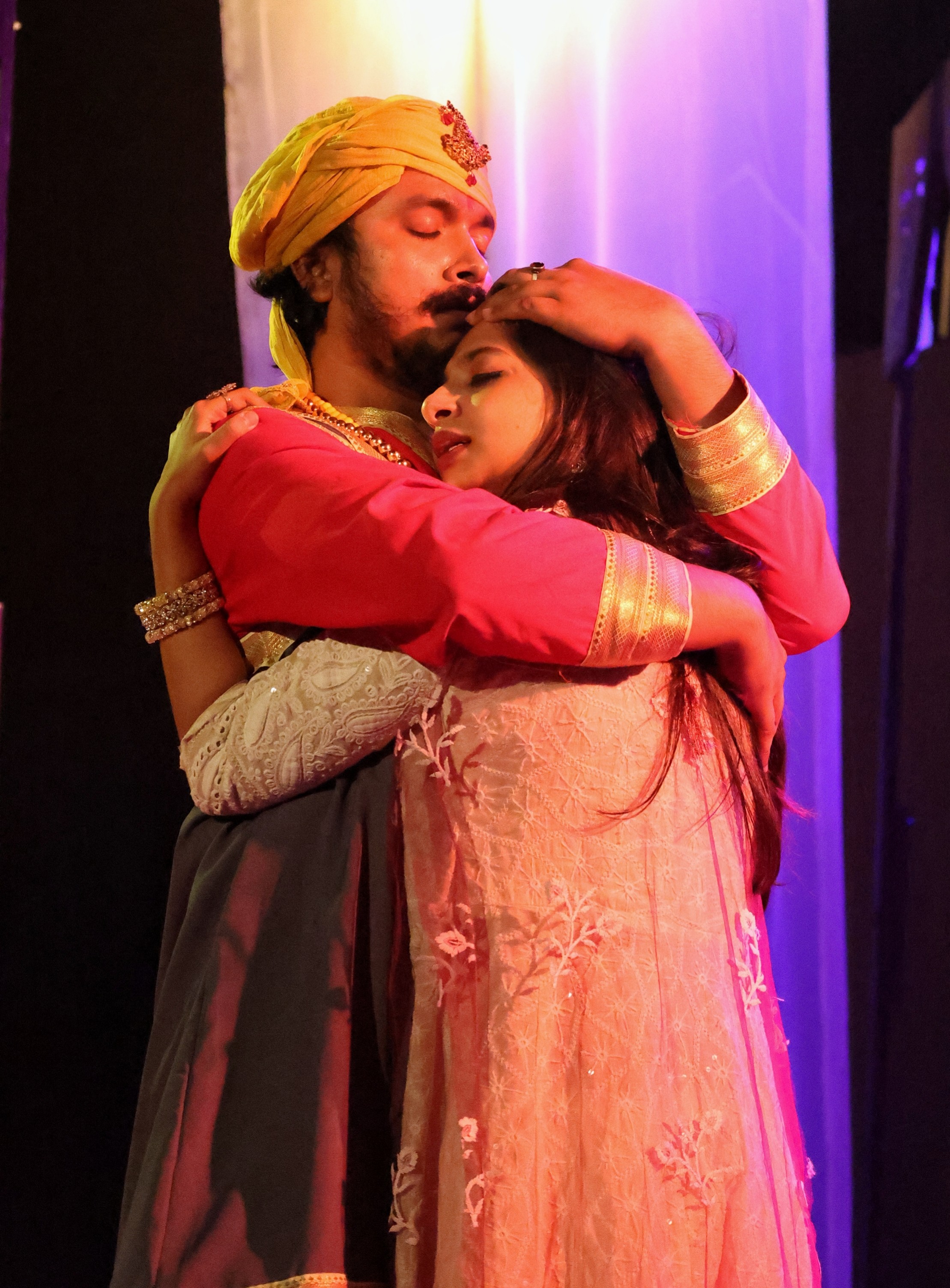
The years 1565–1576 CE marked one of the most turbulent periods in the history of Bengal and India. During this time, Kalapahad, the commander of the Sultan of Gaur, became infamous for destroying and plundering numerous Hindu temples, including the revered Jagannath Temple at Puri. As a result, his name is often mentioned alongside iconoclastic invaders such as Bakhtiyar Khilji, Malik Kafur, and Sultan Mahmud. Yet Kalapahad’s story is fundamentally different. He was not born a Muslim, but into a Brahmin family. His conversion was shaped by the rigid orthodoxy and social prejudices of the time. While many marginalized Hindus embraced Islam—particularly the egalitarian ideals of Sufism—to escape the oppression of the caste system, Kalapahad’s journey followed a different path. It was also an era when Bir Chandra, the only son of Nityananda Goswami, sought to bring many of these people into the Vaishnava faith. Kalapahad did not destroy temples merely to demonstrate his allegiance to Islam. Behind those acts lay a far more complex history—the anguished outburst of a deeply disillusioned man.
“Kalapahad” is a theatrical exploration of that forgotten human story, seeking to uncover the turmoil within the man behind one of history’s most controversial figures